
Kingdom Rush Tower Defense TD
Ironhide GamesStrategy
4.726.47K Reviews
- Version
- 6.4.18
- Installs
- 10.00M
- Age Rating
- Everyone 10+
Screenshots
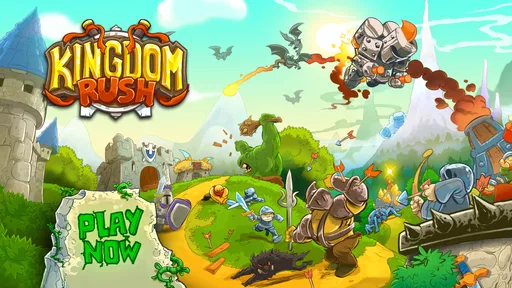
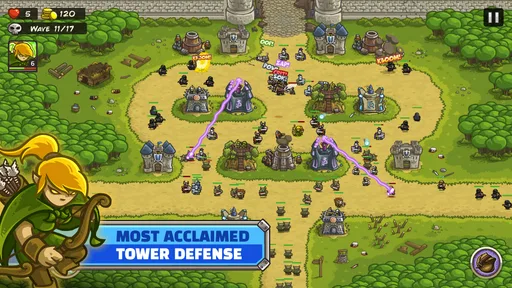
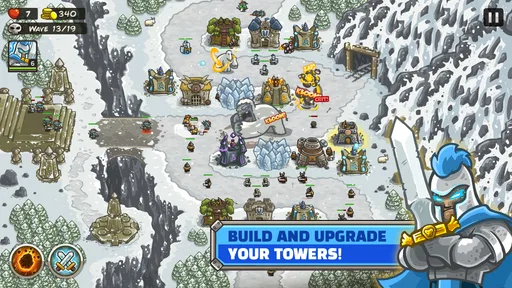
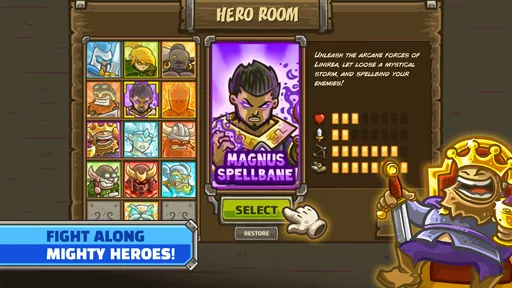
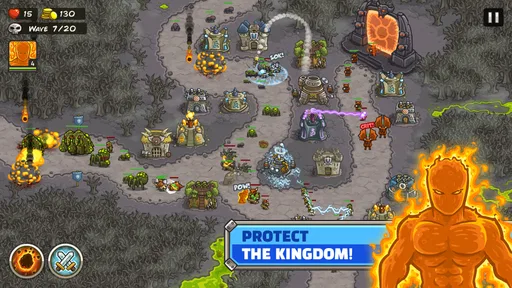
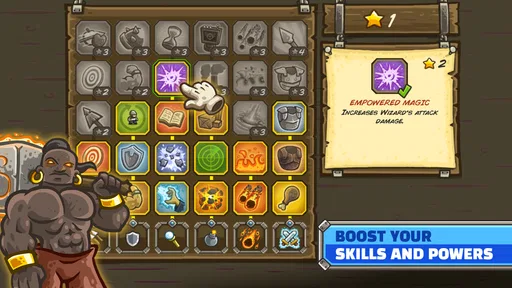
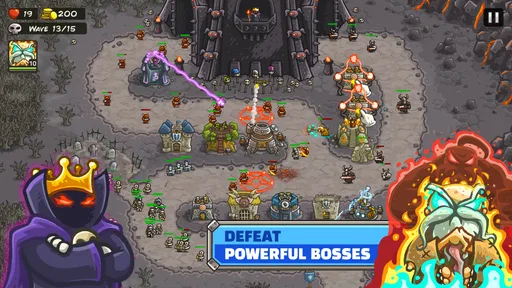
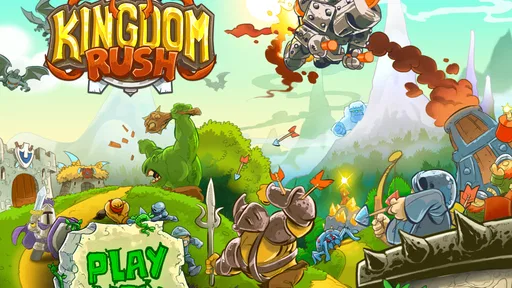
Our Review of Kingdom Rush Tower Defense TD
 Analysis by Appyee
I have always liked strategy games that make me think quickly without demanding a long tutorial, and Kingdom Rush Tower Defense TD still fits that description remarkably well. It is a classic tower defense game from Ironhide Games, but it does not feel like a passive exercise in placing buildings and waiting. Every wave asks me to read the battlefield, predict where pressure will build, and decide whether my limited resources should improve an existing tower or open a new answer to the next threat.
The basic idea is easy to understand: enemies follow roads toward the kingdom, while I build defenses beside their route. The real appeal comes from the decisions between those simple actions. A strong tower in the wrong location can waste an entire wave, while a modest combination of towers can hold a difficult lane if I place them with a plan. That balance makes this a particularly approachable strategy game for beginners, yet it leaves enough room for experienced players to replay stages and refine their choices.
Its scale is also worth noting. The game has earned a 4.7 average from around 851 thousand ratings and has passed 10 million installs. Those figures do not replace personal experience, but they help explain why this older release remains easy to find among mobile tower defense games. It is free to start, aimed at Everyone 10+, and currently listed as version 6.4.18 for devices running Android 5.0 or later.
How I play a normal stage from the first wave to the last
My baseline workflow starts before I spend anything. I look at the road shape, identify where enemies will bunch up, and note which tower positions cover more than one useful stretch. This small pause matters because the most visible building spot is not always the best one. A position near a bend may let a tower fire for longer, while a location near the exit may be more valuable as a final safety net.
I usually begin with a balanced layout rather than immediately specializing. A reliable early setup gives me a way to handle ordinary enemies while keeping enough flexibility for the first unexpected threat. If I spend everything on one expensive upgrade, I may gain impressive damage in one lane but lose the ability to respond elsewhere. The game rewards me for thinking in terms of coverage, not just individual tower strength.
During a wave, I watch what is actually getting through instead of upgrading automatically. If enemies are surviving with only a sliver of health, a damage improvement can be the cleanest fix. If they are reaching the exit because several targets are slipping past at once, more coverage or better control may matter more than raw damage. I find this distinction especially useful when replaying a stage: the correct response is often different from the upgrade I first wanted to buy.
One habit that improves nearly every attempt is keeping a small reserve of resources. I do not treat every available coin as money that must be spent immediately. Holding something back gives me room to react when the next wave reveals a weakness. This is particularly important near the middle of a stage, when an apparently comfortable defense can suddenly become inefficient against a new enemy group.
The game’s pacing supports this workflow well. I can make decisions between waves, then watch the result without needing to control every projectile or unit manually. That makes it suitable for a short session during a commute or a longer attempt when I want to chase a cleaner victory. A realistic everyday use is playing one stage while waiting for an appointment: I can stop after a failed attempt, remember the problem spot, and return later with a specific adjustment instead of starting from zero mentally.
Why tower placement matters more than early spending
The first useful question is not “Which tower is strongest?” but “Where will this tower have the most opportunities to work?” A defensive building that can attack enemies for several seconds is often more valuable than one with a higher theoretical output but poor access to the road. I also avoid filling every available position too soon. Empty space can be strategically useful when I know a later wave will require a different answer.
Another repeatable habit is separating the battlefield into jobs. I want some defenses to handle ordinary traffic, others to slow or weaken difficult targets, and a final layer that prevents one mistake from ending the stage. This does not mean I use the same arrangement every time. The road layout and the enemies determine the balance, but thinking in roles stops me from building a collection of towers that all solve the same problem.
When a stage goes badly, I replay it with one change at a time. Moving every tower and changing every upgrade makes it impossible to learn what worked. Instead, I might keep the opening arrangement, delay one purchase, and use the saved resources when the pressure changes. That method turns failure into a testable lesson and is more useful than simply repeating the same sequence faster.
Settings and small controls worth checking
I recommend checking the game’s available settings before settling into a long session. The most important practical concern is whether the presentation feels comfortable on your device: sound, music, and general display preferences can affect whether the game works well in a quiet public place or during a focused home session. I prefer to adjust those choices before starting a difficult stage rather than interrupting a promising run.
I also pay attention to the pace of play and the way I interact with the battlefield. Tower defense is easier to read when I am not rushing through decisions. If I am experimenting with a new layout, I use a calmer rhythm and watch the result carefully. Once I understand the stage, I become more deliberate about moving through familiar sections. The useful shortcut is not a secret button; it is building a repeatable routine that reduces unnecessary hesitation.
For players using an older phone or a smaller screen, comfort can be more important than raw performance. I keep my taps centered on the intended tower position and avoid making quick purchases while distracted by a busy wave. On a compact display, a rushed tap can cost more than a few seconds, especially when the wrong upgrade changes the entire defensive plan. The interface is approachable, but precision still improves with practice.
Because the game is free, I would also check the purchase controls before handing the phone to a child. The content rating is Everyone 10+, and optional purchases range from $0.99 to $99.99 per item. That does not make spending necessary for enjoying the core experience, but it does make device-level purchase protection sensible in a family setting. I see this as basic preparation rather than a criticism of the game itself.
Faster patterns that make repeat attempts more efficient
Experienced play is less about memorizing one perfect build and more about recognizing patterns early. After a few attempts, I stop treating each wave as a surprise. I know which parts of the road are likely to become crowded, which positions are worth preserving, and where a backup defense can save a run. This lets me spend less time reacting and more time preparing.
One of my favorite habits is to upgrade with a purpose rather than by habit. If a tower is already doing its job, I ask whether improving it will solve the next problem or merely make a comfortable area even safer. That question prevents a common mistake: strengthening the part of the map that is already winning while the real weakness sits closer to the exit.
I also use the road itself as a timing tool. A tower does not need to destroy an enemy instantly to be useful. If it can keep a group under pressure while another defense finishes the job, the combination may be more efficient than two expensive damage towers. This is where the game becomes more interesting than a simple checklist of upgrades. The value of a building depends on what the rest of the defense is doing at the same time.
When I am trying to improve a previous result, I focus on the first moment the defense becomes unstable. The final leak is often only the visible consequence. The real mistake may have happened several waves earlier, when I spent resources in a low-value location or failed to prepare for a change in enemy pressure. Finding that earlier turning point is one of the most useful skills the game teaches.
A practical repeatable routine looks like this:
Study the road before placing the first tower and identify positions with long or overlapping coverage.
Build an opening defense that can handle ordinary enemies without spending the entire reserve.
Watch the first serious weakness instead of upgrading the most attractive tower automatically.
Keep a final response near the dangerous end of the route rather than trusting only the opening area.
After a loss, change one decision and replay so the result teaches you something specific.
This approach is faster than restarting randomly because each attempt has a clear purpose. It also makes the game friendlier to people who do not normally enjoy strategy titles. You do not need to calculate everything in advance; you only need to observe carefully, preserve flexibility, and make the next useful adjustment.
Where it differs from simpler tower defense alternatives
Many mobile tower defense games lean heavily toward endless waves, automatic progression, or a large collection of unlocks. Kingdom Rush feels more focused on handcrafted battlefield decisions. I spend more time thinking about placement, timing, and defensive roles than scrolling through menus or managing a broad roster outside the stage. That focus is a major reason I find it easier to return to than games built around constant collection.
It is also more immediately readable than some strategy games that bury the player under statistics. I can understand the battlefield at a glance, yet the choices are not shallow. The trade-off is that players who want a huge number of systems, competitive multiplayer, or a constantly changing live-service structure may find this style too contained. For me, the compact design is a strength, but it is not universal.
Compared with an idle defense game, this demands more attention because victory is not simply the result of waiting for a stronger account. Compared with a real-time strategy game, it is much easier to pick up and pause mentally between waves. I would choose it for focused tactical sessions, while someone seeking social competition or a massive long-term economy may be happier elsewhere.
Advanced limits, spending choices, and who should skip it
The game is forgiving enough for new players, but it can still punish impatience. A stage may appear solved until one poorly handled wave exposes a gap in the layout. That friction is enjoyable when I am in the mood to learn, but it can be frustrating if I want a completely relaxed experience where every attempt succeeds. The best results come from accepting that replaying a stage is part of the design, not evidence that the game has failed.
The free price makes trying it easy, and I appreciate that a player can evaluate the central tower defense loop without committing money first. The presence of in-app purchases does mean that the broader experience may invite additional spending, especially for someone who wants to unlock or access everything quickly. I would personally begin without buying anything, learn which stages and systems I actually enjoy, and only then decide whether an optional purchase adds meaningful value.
Another limitation is that the game’s traditional structure may feel familiar to players who have already spent years with tower defense classics. Its strength is execution: clear lanes, readable threats, and satisfying decisions. It is not the right pick if you are looking for a radically experimental format or a strategy game that changes its rules every few minutes. Its appeal comes from polishing a proven structure rather than abandoning it.
I would also skip it if your ideal mobile game requires a strong social layer. This is a personal battlefield experience, and the satisfaction comes from improving your own decisions. It is better for someone who enjoys solving a map than for someone who needs guilds, direct opponents, or constant shared events to stay interested.
For parents, the age guidance of Everyone 10+ makes it a reasonable candidate for younger strategy fans, but I would still explain that the game includes optional purchases. For adults, the bigger consideration is patience: the game is easy to understand, yet mastery depends on noticing small mistakes and accepting a second or third attempt.
What mastery looks like in practice
For me, mastery is not reaching a stage with the most expensive towers as quickly as possible. It is being able to explain why every important building is where it is, what problem each upgrade solves, and which resource I am deliberately saving. Once I can make those choices consistently, difficult waves become manageable without relying on luck.
The strongest advanced habit is planning for failure without making the whole defense weak. I want enough early coverage to survive normal pressure, but I also want a reserve position or resource buffer for the unexpected. That balance creates a more stable run than building an impressive opening and hoping nothing changes.
I also learn to distinguish a bad layout from a bad sequence. Sometimes the towers are correct but the upgrades arrive too late. Sometimes the spending order is fine, but one building sits where it cannot contribute enough. Separating these problems saves time because I know whether to rebuild the map or simply adjust the timing.
That is the kind of detail a short store summary cannot communicate. The game looks simple because its rules are clear, but the best decisions come from combining placement, observation, controlled spending, and repeatable habits. It gives me enough information to improve without turning every wave into a spreadsheet.
Ironhide Games has made a strategy game that remains approachable while still respecting the player’s attention. The 2013 release date is visible in its classic structure, but that is not automatically a weakness. In a market full of noisy systems and aggressive progression loops, a focused tower defense game can feel refreshingly direct.
My final recommendation is straightforward: try it if you want a polished, readable strategy game for short sessions, careful replaying, and satisfying battlefield decisions. Start free, check the settings for your playing environment, keep some resources unspent, and judge upgrades by the problem they solve rather than their appearance. Skip it if you need multiplayer competition, endless social progression, or a completely hands-off experience.
After repeated sessions, I still find the central loop rewarding because improvement is visible in my decisions. I do not merely become stronger; I become better at reading the road, preparing for pressure, and recovering from mistakes. Kingdom Rush Tower Defense TD is at its best when I treat each stage as a small tactical puzzle, and that is exactly why I continue recommending it to friends who want strategy without unnecessary complexity.
Verdict
Strengths of Kingdom Rush Tower Defense TD
- Easy to learn, with clear tutorials and intuitive touch controls.
- Distinct tower types encourage varied strategies and experimentation.
- Hero abilities add useful tactical options during difficult waves.
- Levels offer replay value through stars, challenges, and difficulty modes.
- Runs smoothly on most modern Android and iOS devices.
Limitations of Kingdom Rush Tower Defense TD
- Some advanced heroes and content may require additional purchases.
- Later stages can feel highly dependent on precise upgrade choices.
- Limited multiplayer features for players seeking competitive action.
- Repeated enemy patterns may reduce variety during longer sessions.
- A few levels can become frustrating without repeated trial and error.
Other Releases by Ironhide Games
View All
Kingdom Rush Vengeance TD Game
Strategy4.7

Kingdom Rush Frontiers TD
Strategy4.8

Kingdom Rush 5: Alliance TD
Strategy4.6

Iron Marines 2 - Invasion RTS
Strategy4.6
Similar Picks in This Category
View All
Clash of Clans
Supercell4.5

Plants vs. Zombies™
ELECTRONIC ARTS3.7

Lords Mobile: Kingdom Wars
IGG.COM4.5

Clash Royale
Supercell4.4

State.io — Conquer the World
CASUAL AZUR GAMES4.1

Car Driving School : Car Games
Spark Game Studios3.9
Frequently Asked Questions
What is Kingdom Rush Tower Defense TD?
Kingdom Rush Tower Defense TD is a fantasy strategy game in which you defend a kingdom from waves of enemies by building and upgrading towers along a fixed path. Each tower type has a different role, such as stopping ground units, attacking flying enemies, or supporting nearby defenses. The game combines tactical planning, colorful visuals, humorous characters, and progressively more challenging stages.
Is Kingdom Rush Tower Defense TD free to play?
Kingdom Rush Tower Defense TD can generally be downloaded for free, although availability and pricing may vary depending on the Android or iOS store and the edition you choose. The free version may include optional purchases, such as additional heroes, content, or upgrades. Before downloading, check the store listing carefully to see which features are included and whether any in-app purchases are offered.
Does the game require an internet connection?
Kingdom Rush Tower Defense TD is primarily designed as a single-player experience, so many of its core levels can usually be played without a constant internet connection after installation. However, an internet connection may be needed for downloading the game, receiving updates, accessing store features, restoring purchases, or using certain platform services. Offline behavior can also differ between devices and versions.
Is Kingdom Rush Tower Defense TD suitable for beginners?
Yes, the game is accessible to beginners, but it gradually introduces more complex strategic decisions. Early stages explain tower placement, upgrades, enemy types, and special abilities in a straightforward way. Later levels become considerably harder and require careful resource management, timing, and knowledge of enemy weaknesses. Players who enjoy retrying stages and improving their strategy will likely find the difficulty rewarding.
What devices are compatible with Kingdom Rush Tower Defense TD?
Kingdom Rush Tower Defense TD is available for supported Android and iOS devices, but exact compatibility depends on the specific edition, operating-system version, and hardware requirements. Older phones or tablets may experience reduced performance, limited storage, or incompatibility. Before downloading, review the official Google Play or App Store listing to confirm the required operating system, available space, and any device restrictions.
Play our best games!


